
How to decant a red wine: an illustrated practical guide
Decanting a red wine is one of those gestures that impress without people always understanding why. Yet the logic is simple: it is about aerating the wine to release its aromas, or separating it from its sediment so that only the clear liquid is served. These two distinct goals call for slightly different techniques. This guide explains everything step by step, using a concrete example as a common thread: the Côte Rôtie La Madinière 2023 from Domaine Yves Cuilleron, a schist wine from the Côte Brune, blended from 97% Syrah and 3% Viognier.
Why decant a red wine: two very different reasons
Two operations that share the same name are often confused. The first is decanting: you slowly pour the wine into a decanter to separate the liquid from the solid sediment that has formed over time. The second is aeration: you pour the wine so that it comes into contact with the air, which allows its aromas to open up and its tannins to soften.
An old vintage with sediment calls for the first technique, gentle and precise. A young, dense wine with tannins still tight benefits more from the second, more generous one. And some wines, like our Côte Rôtie 2023, can fall into either case depending on how they evolve in the bottle.
Do all red wines need decanting?
No, and it is important to know this to avoid spoiling a fragile wine. A light, low-tannin red meant to be drunk young generally does not need decanting. Decanting is mainly useful for:
Young, powerful wines, whose tannins are still firm and whose aromas are a little closed. Contact with the air helps them express themselves fully. Syrah is the perfect example: in its youth, it can seem austere, almost reserved, before unfolding its notes of black fruit, olive, pepper and sometimes violet.
Wines with strong ageing potential, which were made to evolve over several years. The Côte Rôtie La Madinière 2023 has a stated ageing potential of 4 to 15 years. Served today, in 2025, it is still in its early youth. Decanting will give it room to open up.
Older wines with sediment, for which decanting is a practical necessity as much as a tasting precaution.
How long should you decant a red wine?
It is the question everyone asks, and the honest answer is: it depends on the wine. Here are a few reliable guidelines.
For a young, tannic wine like the Côte Rôtie 2023
Allow between 45 minutes and 2 hours depending on the state of the wine and your preferences. If the bottle has just come out of the cellar and the wine seems closed on the first nose, lean towards an hour and a half. If you opened the bottle an hour earlier and the aromas are already starting to show, 30 to 45 minutes in the decanter will be enough.
A simple tip: pour a little wine into your glass before decanting. Smell it, taste it. If it is austere, almost silent, decant generously. If it already expresses something, be more careful about the decanting time.
For an aged wine with sediment
Here, the goal is not aeration but separating the sediment. Decant slowly, by candlelight or under a direct light, and serve quickly. An old wine can tire very quickly in contact with air.
Decanting a wine gives it the time to breathe that it was denied during years in the cellar.
How to decant wine properly: a step-by-step guide
Equipment matters, but not as much as technique. A simple, clean, dry decanter is enough. Here is the method.
1. Take the bottle out in advance. If the wine is kept in a cellar, bring it up a few hours before serving. Côte Rôtie La Madinière is served between 16 and 18 °C. Avoid taking it straight from the refrigerator: a wine that is too cold closes up.
2. Don’t shake the bottle. If you suspect there is sediment, stand the bottle upright for 24 hours beforehand so the sediment settles at the bottom.
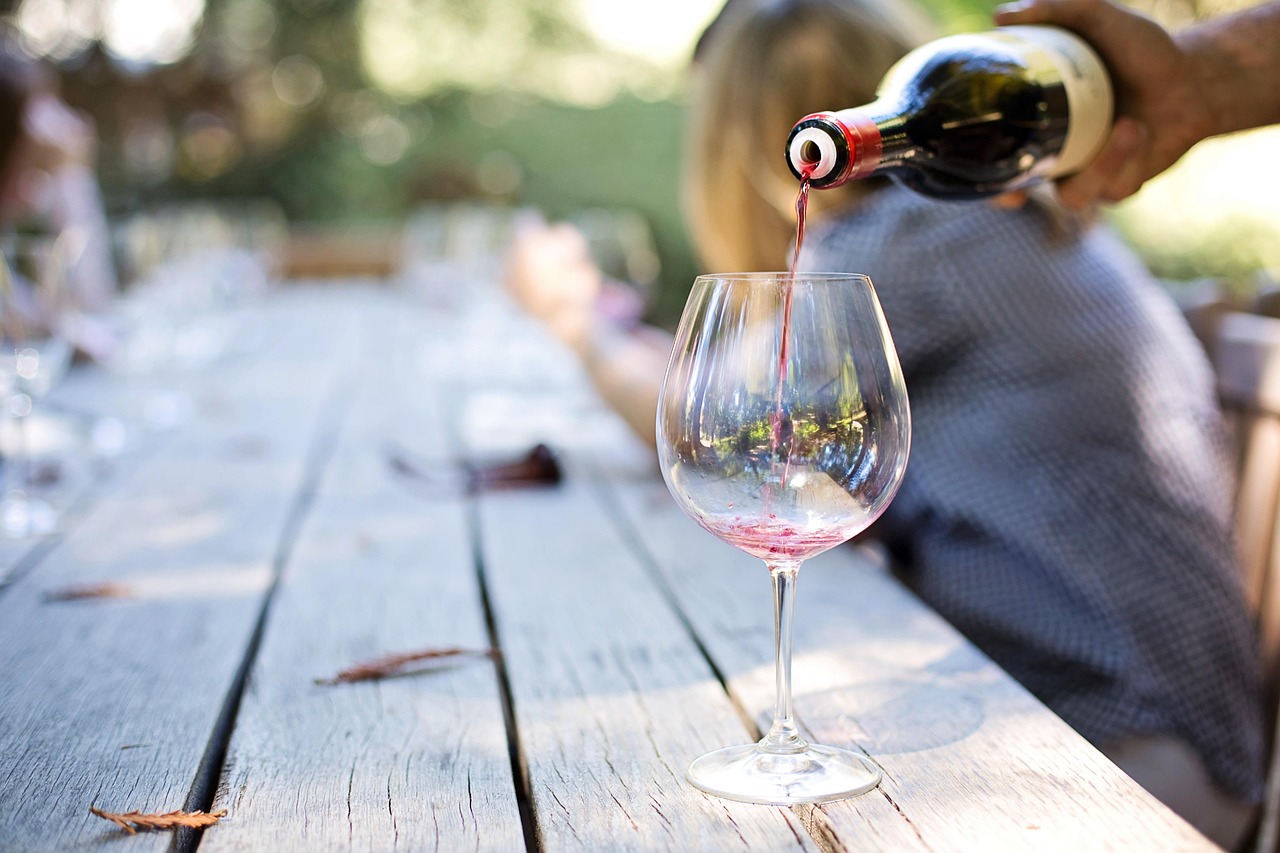
3. Pour in one continuous movement. Tilt the decanter slightly and pour the wine down the inner wall to encourage contact with the air without being rough on the wine. For a young, vigorous wine, you can pour more directly, from higher up, to maximise oxygenation.
4. Stop before the sediment. If you see dark particles rising toward the neck, stop pouring. It is better to leave a little wine in the bottle than to cloud the whole decanter.
5. Let it rest, then serve. Cover the decanter loosely (without sealing it airtight) if you are waiting more than an hour.
Practical tip: For the Côte Rôtie La Madinière 2023, start by opening the bottle 30 minutes before decanting. Simply opening the bottle already starts the oxygenation. Then decant 1 hour before the meal. Serve between 16 and 18 °C, in a large Syrah glass with a flared rim that amplifies the aromas of black fruit and sweet spices. This wine will pair perfectly with roasted or grilled red meat, or a pressed-cheese variety.
La Côte Rôtie La Madinière 2023: a wine that perfectly shows the value of decanting
The Côte Rôtie La Madinière 2023 comes from the Côte Brune, one of the two great slopes of the Rhône appellation, whose schist soils give the wines their characteristic depth and minerality. Syrah shows its most serious side here: intense colour, concentrated black fruit, tannins that are present but fine. The 3% Viognier, a white grape co-fermented with the Syrah according to the appellation’s tradition, adds a floral touch and a slightly silky texture that softens the whole without betraying its character.
At 12.5% alcohol, this wine is remarkably balanced for its appellation. But in 2025, it is still young. Its tannins still have grip, and its aromas are still taking shape. This is precisely the profile of a wine that will benefit fully from decanting: it will open up, soften, and reveal an aromatic complexity that simply opening the bottle is not enough to bring out.
If you would like to wait, its ageing potential is estimated at between 4 and 15 years. In 5 or 8 years, it will probably be even more expressive, and decanting will then be shorter and gentler. But drinking it today, with the care of a good decanting, is perfectly legitimate and enjoyable.
FAQ: your questions about decanting
Can you decant a white or rosé wine?
Rarely, but it happens. Some very structured whites, made with long barrel ageing, can benefit from a short decanting of 15 to 20 minutes to open up. On the other hand, rosés and light, aromatic whites generally don’t need it, and prolonged decanting may even flatten them.
How can I tell if I’ve decanted for too long?
The wine starts to lose its finest aromas and seems flatter, less lively on the palate. The tannins may feel less defined. If you taste regularly while decanting, you will sense the moment when the wine is at its best. That is the right time to serve, without waiting any longer.
Should you rinse the decanter before using it?
Yes, always, even if it looks clean. Rinse it with hot water and no soap (soap leaves residues that alter the wine's aromas), then dry it carefully or let it drain upside down before use. A decanter that smells of the cupboard or of stale glass can spoil the tasting.
Article written with the help of AI.
Leave a Reply